

The conditions we create for a seedling to grow quickly and healthily—heat, constant humidity, plants close together and protected from the wind—are almost exactly the same conditions that favor fungi, insects, and pathogens that attack it. A well-managed nursery is an optimal environment for producing plants, but it is also an optimal environment for a disease to multiply and spread, and this duality is what forces us to treat health as a priority rather than a late reaction.
The risk is exacerbated by two more reasons. The first is that young plants are the most vulnerable of their entire life, because their tissues are tender, their defenses are still forming, and their root system is small, so an attack that an adult tree could withstand without issue can kill a seedling in days. The second is that in a nursery, plants are so close together and share so much—the same substrate, the same irrigation water, the same tools—that what starts in one corner of the tray ends up affecting the entire production if no one intervenes in time. It is worth knowing the main enemies of young material, understanding what favors them, and above all, learning to prevent them, because in nursery health, prevention costs a fraction of what a declared outbreak costs.
Collapsing, the Disease That Kills Before You See the Problem
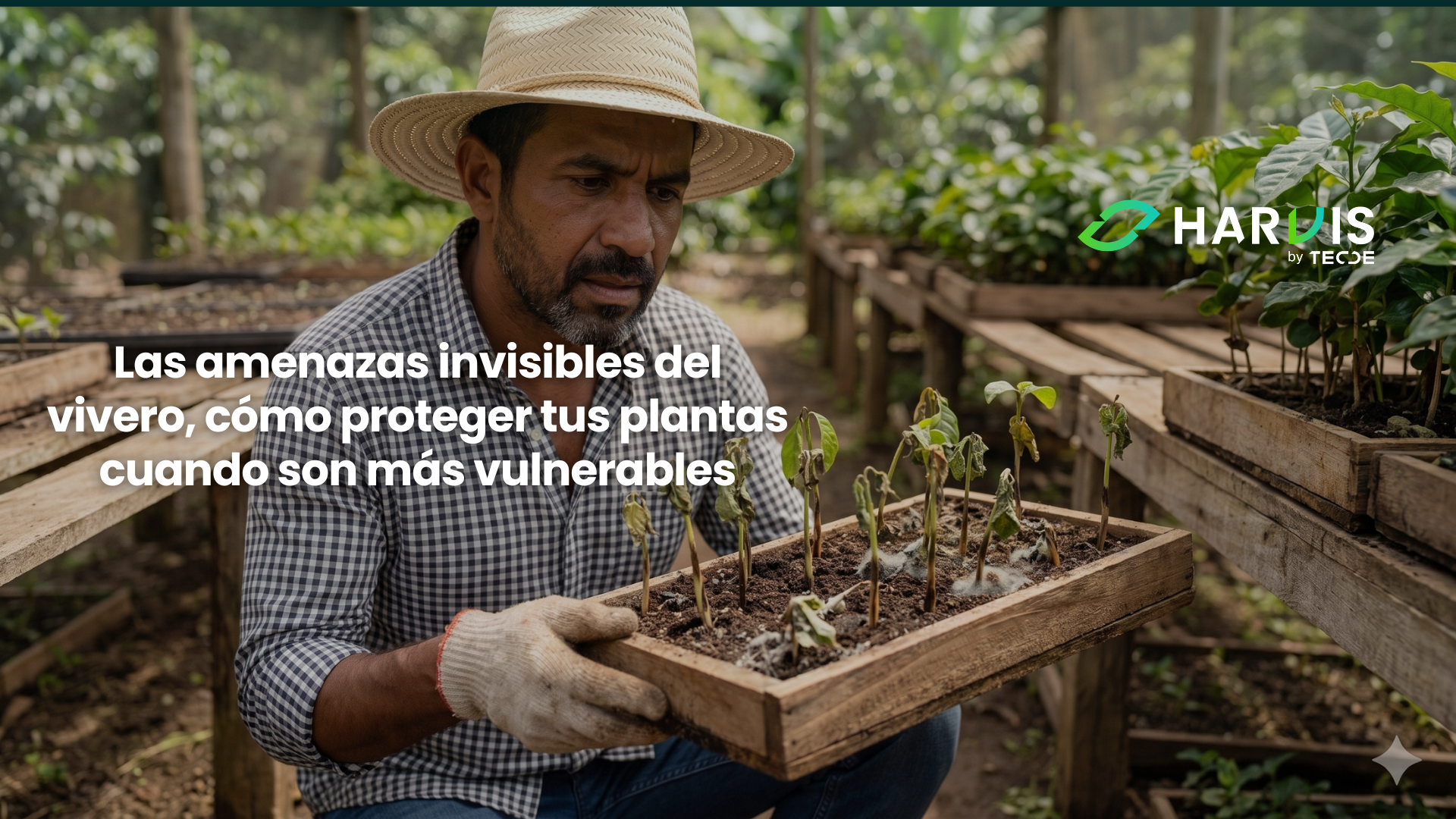
The most feared disease in any seedbed is known as collapsing or damping off, and in the technical literature, it appears under the name damping off. It is not caused by a single organism but by a complex of soil pathogens that act alone or together, mainly fungi from the genera Rhizoctonia and Fusarium and oomycetes like Pythium and Phytophthora. Its behavior is as destructive as it is simple; they attack the seed or the base of the stem of the newly emerged seedling, the tissue rots and strangles, and the plant falls and dies.
What makes this disease especially dangerous is that it can act before or after emergence. When the attack occurs before the seedling breaks the surface, the seed rots underground, and all you see are clear gaps in the seedbed, with no sick plants to alert you, so it is often attributed to poor germination or low-quality seed when in reality there was an infection. When it occurs after emergence, the seedlings look normal for a few days, and then their stems darken at the base and suddenly collapse. In both cases, by the time the problem is evident, much of the damage has already occurred.
These pathogens are practically in all soils, surviving on dead organic matter and producing structures that withstand long periods until conditions favor them. Their favorite conditions are well known, as Pythium and Phytophthora thrive in cold, waterlogged substrates or with excessive irrigation that never dries out, while Rhizoctonia and Fusarium are favored by warmer and somewhat drier conditions. In coffee nurseries, collapsing is associated with contaminated substrate, excess moisture, and too much shade in the nursery. The way they spread is also revealing, as they travel in water, on contaminated tools, in reused trays from a previous season, and on the infected plants themselves that are moved from one place to another.
There is a detail that connects directly with what we saw in the previous blog about nursery nutrition. An excess of nitrogen favors the development of collapsing by Rhizoctonia, because it produces tender and succulent tissues that are easier to infect, which is why a common technical recommendation is to delay the application of nitrogen until the seedlings have passed the stage of highest risk. The other side of the same coin is equally important, as a vigorous, well-nourished, and fast-growing seedling can survive in the presence of these fungi, while a weak seedling succumbs under the same conditions. Health and nutrition are not separate topics but two sides of the same management.
Foliar and Root Diseases That Weaken Without Killing
Not all threats kill immediately, and some cause more silent damage by weakening the plant just before it reaches the field, when it needs strength the most. In coffee nurseries, the iron spot caused by the fungus Cercospora coffeicola is a clear example, as it causes lesions on the leaves surrounded by a yellow halo and leads to premature leaf drop, which reduces the vigor of the plants and affects their overall condition before transplanting. A plant that arrives in the field defoliated by this disease starts its establishment at a significant disadvantage, even if none have died.
In avocado, the main threat in the nursery is the same one that haunts the crop throughout its life, root rot caused by Phytophthora cinnamomi, considered the most important disease of avocado in all producing areas of the world. Its danger in propagation is twofold, as it can kill young plants in the nursery and because an infected plant with no visible symptoms can carry the pathogen to the field, where it will manifest months later, after you have already invested in establishing the crop. Additionally, fungi like Fusarium and Rhizoctonia and several genera of nematodes have gained importance due to their detection in nurseries and seedbeds, as they cause delays in plant development.
Nematodes deserve a separate mention because their damage is difficult to attribute. They are microscopic organisms that attack the roots and generate galls in the case of those from the genus Meloidogyne, with secondary symptoms that can easily be confused with other problems, such as reduced height and plant development. There is a particularly instructive piece of information from Cenicafé, which is that seedbed plants affected by these nematodes show a higher incidence of iron spot and the consequent defoliation despite receiving adequate fungicide treatment. What you see is a foliar disease that does not respond to the fungicide, but the real cause is underground, in a root attack that weakened the plant and made it susceptible. This type of interaction explains why in nursery health it is advisable to diagnose before treating, as attacking the wrong symptom wastes product and leaves the problem intact.
The Insects That Fly In and Those That Travel Hidden
Pests in a nursery form a fairly consistent group regardless of the crop, dominated by small insects and mites that reproduce very quickly in warm and protected environments. Among the most common are whiteflies, thrips, aphids, spider mites, leaf miners, and fungus gnats, whose larvae attack the roots in moist substrates. They all share two characteristics that make them problematic: they have short life cycles that allow them to multiply in a few days, and several of them transmit viruses and other pathogens while feeding.
That second point raises the risk above direct damage. In citrus, the most feared pest is not due to what it eats but to what it transmits, as the Asian psyllid is the vector of the bacteria that causes greening or HLB, a disease for which there is no cure once the tree is infected. Managing this disease in propagation rests on two pillars: using pathogen-free grafting material and strictly controlling the vector insect, which makes pest control in the nursery a matter of health and not just aesthetics. It is also worth knowing that certain very small insects, such as some species of thrips, can cross most of the nets commonly used to exclude pests, so physical protection has limits that need to be understood.
A practical aspect that many nurseries overlook is that several of these pests cause damage that does not become visible until after the insect has already left. Thrips, psyllids, and leafhoppers feed on growing tissue, and the deformities appear when the leaf expands, weeks later, so if you wait to see the damage to act, the plants may already be ruined for their purpose. That is precisely why monitoring, and not reaction, is the basis of any serious health management in propagation.
Do your nursery plants arrive healthy in the field, or do they carry a hidden problem that will manifest months later? Many establishment failures originate from nursery health that no one checked in time. Harvis helps you connect the state of your material with its subsequent performance. Talk to our team →

Prevention, Much Cheaper Than Any Treatment
In light of this scenario, the good news is that most of these problems can be prevented with relatively simple and low-cost practices, and that prevention is incomparably more effective than any treatment applied when the outbreak has already been declared. The foundation of everything is hygiene, a not-so-glamorous but decisive concept.
The substrate is the first control point. Starting from a clean, treated, or sterilized substrate eliminates the main source of the pathogens that cause collapsing, which is why technical recommendations for coffee germinators include preparing washed and treated sand before sowing. Here, by the way, another advantage of the compressed tablets or pellets we mentioned in the previous blog appears, as their substrate comes sterilized from the factory. Irrigation water is the second point, because water is the preferred vehicle for oomycetes, and using water from a clean or treated source cuts off a very efficient dispersal route. The third point is surfaces and tools, as pathogens survive in small amounts of soil adhered to reused trays, countertops, and scissors, so disinfecting everything that touches the plants and avoiding reusing trays without washing them is an elementary and very cost-effective measure.
Environmental management is the other half of prevention. Avoiding excessive irrigation and frequent, shallow watering, allowing the substrate to drain and aerate between irrigations, maintaining good air circulation among the plants, and regulating shade to prevent permanent humidity are practices that remove the conditions fungi need. This is complemented by the physical exclusion of insects through nets at the openings of the nursery, which significantly reduces the entry of whiteflies, aphids, thrips, and miners. And above all is the principle we discussed in the first blog of this season, starting from healthy and certified material, because no hygiene measure compensates for having introduced a pathogen within the mother plant itself.
Monitor, Diagnose, and Manage Integratively
No prevention is perfect, so the second line of defense is to detect problems when they are still small. Constant monitoring is the foundation of integrated management because it allows action before an infestation becomes harmful and because many pests are more vulnerable to any control at a specific stage of their development, so knowing when they are is what makes intervention effective. In practice, this translates to regularly checking the plants and paying attention to the undersides of the leaves and new shoots, using color sticky traps to capture and quantify flying insects, and keeping a simple record of what is found to recognize trends before they become outbreaks.
Monitoring has a second, less obvious benefit, which is that it reveals the presence and activity of natural enemies, allowing us to avoid applications at times that could harm them and choose products compatible with biological control. That biological control is now a mature tool in propagation, with predatory mites, parasitoid wasps, and beneficial fungi available for the main nursery pests. On the disease front, something similar occurs, as microorganisms like Trichoderma are used to colonize the substrate and suppress the pathogens that cause collapsing, occupying the space before they arrive. In some cases, the application of mycorrhizae in the seedbed serves a dual function, as it improves nutrient absorption and strengthens the plant against stress and root pathogens.
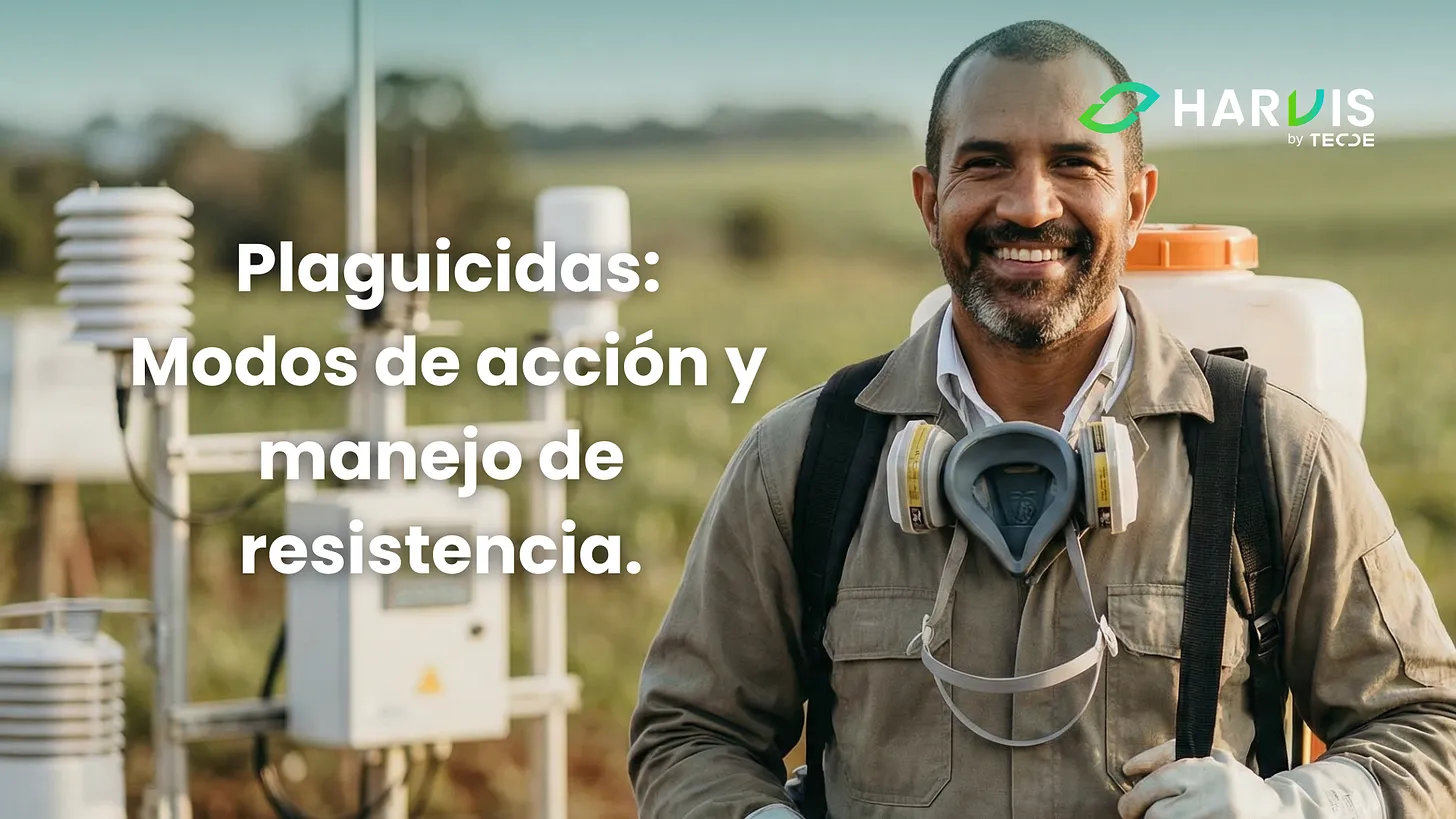
All this does not mean renouncing synthetic products, but using them judiciously within an integrated scheme. When a chemical application is required, it is important to correctly diagnose the causal agent, because the available products are very specific regarding which pathogens they control, and applying the wrong one resolves nothing. It is also important to rotate products with different modes of action to prevent pathogens from developing resistance and to respect the indicated doses and periods. The combination of clean substrate, well-managed environment, physical exclusion, constant monitoring, biological control, and rational use of chemical control is what sustains the health of a nursery over time, much better than relying on a single method.
A Problem That Manifests in the Field but Was Born in the Seedbed
A large part of the early losses of plants, irregular growth, and disease outbreaks that appear in the first years did not originate in the lot where they manifest, but came with the material from the nursery. A plant that left with a root pathogen without visible symptoms, or weakened by defoliation in the seedbed, or carrying a vector insect, brings the problem with it and expresses it later, when the producer's attention is already focused on the soil, the climate, or the management of the lot.
This link is difficult to recognize from the field, because months pass between leaving the nursery and the appearance of the problem, and by then the cause seems to be anywhere else. But it becomes visible when the establishment data, early mortality, and disease outbreaks from many lots are crossed with information about the origin of the material and the sanitary conditions of its propagation. By relating where the problems appear with where the plants came from, it is possible to distinguish when an outbreak responds to a condition of the lot and when it responds to material that already came compromised, something that completely changes the decision, as in the first case you correct the management and in the second you must review the source of your plants.
As we already addressed in our blog on Pesticides, Modes of Action, and Why They Matter for Your Management, which you can read here, understanding how each product works is what allows you to use it well, rotate it judiciously, and avoid resistance, something especially important in such a sensitive space as a nursery. In the next and final blog of this season, we will see the innovations that are transforming the propagation of coffee, avocado, citrus, and blueberries, from micropropagation to biostimulants and digital monitoring. The takeaway worth remembering today is that nursery health is not an additional expense but the protection of all the previous work, because it is of no use to choose the best genetic material and multiply it well if a pest or pathogen takes it away just when the plant is most fragile.
Protect your material at the stage where it is most vulnerable. Write to us via WhatsApp and receive technical assistance for the sanitary management of your nursery, problem diagnosis, and the quality of your plants.
Consulted References
- Rutgers Plant & Pest Advisory. (2020). Damping-off: Identifying and Controlling Early Season Pathogens. Rutgers University. https://plant-pest-advisory.rutgers.edu/damping-off-identifying-and-controlling-early-season-pathogens-2-2-2/
- Pacific Northwest Pest Management Handbooks. (2023). Damping-off in Tree Nurseries. https://pnwhandbooks.org/plantdisease/pathogen-articles/common/fungi/damping-tree-nurseries
- UC IPM. (n.d.). Damping-Off / Floriculture and Ornamental Nurseries. University of California Agriculture and Natural Resources. https://ipm.ucanr.edu/agriculture/floriculture-and-ornamental-nurseries/damping-off/
- UC IPM. (2024). Damping-Off Diseases in the Garden. University of California Agriculture and Natural Resources. https://ipm.ucanr.edu/home-and-landscape/damping-off-diseases-in-the-garden/
- Pacific Northwest Pest Management Handbooks. (2026). Greenhouse Plants, Ornamental — Rhizoctonia Damping-off, Root and Stem Rot. https://pnwhandbooks.org/plantdisease/host-disease/greenhouse-plants-ornamental-rhizoctonia-damping-root-stem-rot
- University of Connecticut IPM. (2011). Monitoring Arthropod Pests of Connecticut Nurseries. https://ipm.cahnr.uconn.edu/monitoring-arthropod-pests-of-connecticut-nurseries/
- Cenicafé. (2022). Iron Spot (Cercospora coffeicola). Disease Management [Infographic]. https://publicaciones.cenicafe.org/index.php/infografias/article/view/2864
- Baeza-Aragón, C. A. (1979). Symptoms Due to Nematodes of the Species Meloidogyne in Coffee. Cenicafé Technical Advances, 90, 1-4. https://doi.org/10.38141/10779/0090
- University of Missouri Extension. (2009). Using Integrated Pest Management in Greenhouses and Herbaceous Nurseries. https://extension.missouri.edu/publications/ipm1026
- Cenicafé. (2003). Coffee Plant Diseases: Collapsing in Coffee Seedbeds and Nurseries. https://biblioteca.cenicafe.org/bitstream/10778/717/10/10%20Enfermedades%20cafeto.pdf
- AGROSAVIA. (2020). Diseases and Abiotic Disorders of Avocado. https://editorial.agrosavia.co/index.php/publicaciones/catalog/download/162/151/1128-1
- UC IPM. (n.d.). Huanglongbing (HLB) / Tristeza Disease Complex. University of California Agriculture and Natural Resources. https://ipm.ucanr.edu/agriculture/citrus/tristeza-disease-complex/
- University of Florida / IFAS. (2025). Florida Citrus Production Guide: Thrips. https://ask.ifas.ufl.edu/publication/CG005
- Biological Control of Three Major Pests: Whiteflies, Thrips, and Spider Mites Using Two Local Phytoseiid Mites. (2024). Plants / MDPI. https://www.ncbi.nlm.nih.gov/pmc/articles/PMC10976136/