

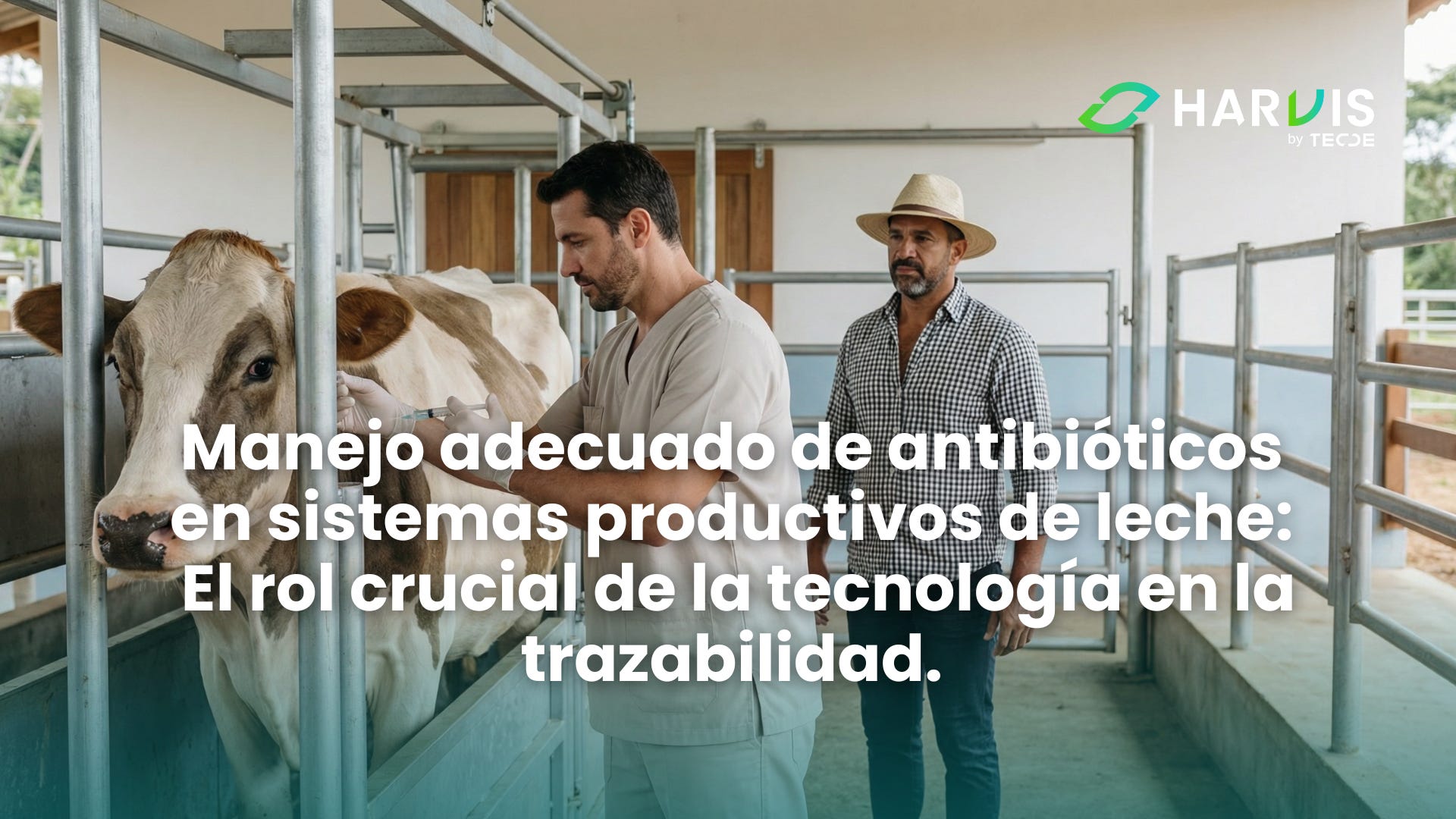
Contemporary dairy production systems administer approximately 847 million doses of antimicrobials globally each year, processing large amounts of information related to veterinary prescriptions, therapeutic protocols, withdrawal times, and residue analysis that remained fragmented in manual records for decades until the convergence of digital technologies, distributed blockchain, the Internet of Things (IoT), and artificial intelligence systems have radically transformed the ability to track every molecule of antibiotic from its prescription to the final analysis of marketed milk. Through these technological advances, unnecessary use of antimicrobials can be reduced to only cases that are truly vital while ensuring food safety, combating bacterial resistance, and optimizing therapeutic protocols through continuous monitoring that integrates veterinary, productive, environmental, and quality data in digital ecosystems that generate complete and auditable traceability of each pharmacological intervention in dairy production systems. The production of bovine milk represents one of the fundamental pillars of global food security. However, this sector faces a growing challenge that demands immediate attention: the responsible use of antibiotics and the need for efficient systems that guarantee traceability from the administration of the medication to the final product in the market. In our previous publications, we have addressed topics related to applied biotechnology, big data for sustainability, and digital transformation of livestock systems, understanding how emerging technologies become facilitating pillars of productive efficiency while promoting sustainable and economically viable practices. This series of analyses has allowed us to identify disruptive technological patterns that are redefining traditional paradigms in livestock production through the integration of digital tools with management protocols based on updated scientific evidence. In the current context, the management of antimicrobials in dairy farming transcends the simple manual recording of treatments to become an integrated system of epidemiological surveillance, pharmacological traceability, and predictive analysis where each generated data feeds machine learning algorithms that optimize therapeutic decisions, predict processes of bacterial resistance emergence, and ensure compliance with increasingly demanding international regulatory standards. Today we delve into the most transformative digital technologies that are revolutionizing the responsible management of antibiotics in dairy production: blockchain traceability systems, electronic prescription platforms, residue detection biosensors, and artificial intelligence algorithms for therapeutic optimization that will allow us to approach better decision-making and are a service that at the end of the day becomes a great support ally for professionals and for each of the actors involved in the supply chain of these productive systems.
🦠 Antimicrobial Resistance as a Global Challenge
In animal production, approximately 70% of all antimicrobials produced worldwide are destined for livestock species, generating selective pressure that facilitates the emergence and dissemination of transferable resistance genes among animal, environmental, and human bacteria through horizontal transfer mechanisms that compromise the effectiveness of critical medical treatments. This implies that antimicrobial resistance represents one of the most critical health threats of the 21st century, with projections from the World Health Organization estimating 10 million annual deaths by 2050 if urgent and globally coordinated measures are not implemented. The use of antimicrobials in dairy farming is projected to increase by 29% by 2040 according to research published in Nature Communications, driven primarily by productive intensification in developing countries, increased global demand for dairy products, and the adoption of intensive systems without parallel implementation of alternative disease prevention technologies. This alarming trend highlights the urgency of developing monitoring, control, and optimization systems for the use of antimicrobials that ensure the sustainability of dairy production without compromising global public health. Dairy production systems face particular health challenges that have traditionally relied on antimicrobials to maintain animal health and economic productivity. Bovine mastitis represents the most prevalent pathology, affecting 20-35% of dairy cows annually and consuming approximately 45% of all antimicrobials used in dairy farming. Intramammary infections caused by pathogens such as Staphylococcus aureus, Streptococcus uberis, and Escherichia coli generate economic losses, considering reductions in production, milk disposal, treatment costs, and premature culling of chronically infected animals. The transition period between gestation and lactation represents another critical window of immunological vulnerability where approximately 70% of all pathologies in adult cattle concentrate, including metritis, retained placenta, ketosis, and displaced abomasum that frequently require antimicrobial therapy. Postpartum metritis affects 15-30% of dairy cows, with conventional treatments including cephalosporins, penicillins, and tetracyclines administered systemically for 3-5 consecutive days. Respiratory diseases in calves represent the leading cause of pre-weaning mortality and antimicrobial use in young animals, with incidence varying between 8-45% depending on management systems, environmental conditions, and implemented biosecurity protocols. The multifactorial bovine respiratory syndrome frequently requires therapy with macrolides, fluoroquinolones, or third-generation cephalosporins, generating particular concern as these antimicrobials are classified as critically important for human medicine.
🚨Superbugs in Dairy Farming
The selective pressure generated by excessive use of antimicrobials has facilitated the emergence of multidrug-resistant bacterial strains in dairy production systems. For example, Staphylococcus aureus has acquired resistance to methicillin (MRSA) and has been isolated from mastitis cases in multiple countries, with high prevalences varying by geographic regions and evaluated production systems. These strains express the mecA gene that encodes altered penicillin-binding proteins, conferring cross-resistance to all commercially available beta-lactam antibiotics. Escherichia coli producing extended-spectrum beta-lactamases (ESBL) represents another emerging threat, with the ability to hydrolyze third-generation cephalosporins through CTX-M, TEM, and SHV enzymes. The prevalence of E. coli ESBL in dairy cattle has increased from 2.3% in 2010 to 12.8% in 2024 according to European epidemiological surveillance data, highlighting the concerning expansion of these resistance mechanisms. The discovery of the mcr-1 gene in 2015, which confers transferable resistance to colistin, generated global alarm by compromising one of the last reserve antimicrobials for infections caused by multidrug-resistant Gram-negative bacteria. The detection of this gene in bovine-derived isolates across multiple continents demonstrates the interconnectedness of resistance reservoirs between animal production and human medicine.

📋Regulatory Framework and International Standards
European Regulation: A Pioneer in Antimicrobial Restrictions. Regulation (EU) 2019/6 on veterinary medicines establishes the most restrictive legal framework globally for the use of antimicrobials in animal production, fully implemented since January 2022. This regulation explicitly prohibits routine prophylactic use of antimicrobials, eliminates mass administration without confirmed diagnosis, and severely restricts the use of critically important antimicrobials reserving them exclusively for cases where there are no effective therapeutic alternatives through confirmation microbiological analysis. Royal Decree 992/2022 complements European regulation by establishing specific guidelines for Spanish production systems, including an absolute prohibition of antimicrobial treatments during the drying off of dairy cows, requiring a transition to selective drying protocols based on somatic cell counts, bacteriological analyses, and individual assessment of risk factors for intramammary infections during the dry period. The National Plan against Antimicrobial Resistance (PRAN) 2025-2027 recently approved sets ambitious goals for an additional 20% reduction in antimicrobial consumption in livestock compared to 2024 levels, with particular emphasis on the progressive elimination of fluoroquinolones, third and fourth generation cephalosporins, and colistin in the production of animal-derived food. 🌎 Regulation in Latin America The regulation of antimicrobials in Latin American livestock presents heterogeneous advances with some countries implementing regulatory frameworks comparable to European standards while others maintain permissive policies that facilitate indiscriminate use. Argentina has implemented through Resolution SENASA 80/2025 a comprehensive traceability system for veterinary products based on mandatory electronic veterinary prescriptions that supervises the prescription, dispensing, and final use of all antimicrobials used in animal production. Mexico operates the Veterinary Products Traceability Information System (SITPV) that electronically records all antimicrobial prescriptions, linking them with individual identification of treated animals, establishment of origin, and prescribing veterinarian. This system generates centralized databases that allow epidemiological analyses of prescription patterns, identification of irrational use, and surveillance of the emergence of bacterial resistances through integration with microbiological monitoring programs. Chile has developed monitoring programs for antimicrobial residues in raw milk that analyze 15,000 representative samples from national production systems monthly, detecting the presence of beta-lactams, tetracyclines, aminoglycosides, and sulfonamides using liquid chromatography coupled with mass spectrometry techniques with detection limits in parts per billion ranges. The results reveal non-compliance rates below 0.8%, indicating satisfactory adherence to established withdrawal times. Colombia has implemented the Responsible Use of Antimicrobials in Agricultural Production Program coordinated by the Colombian Agricultural Institute (ICA) which establishes guidelines for veterinary prescription, mandatory treatment records, and training programs for veterinary professionals and producers. However, limited enforcement and the availability of antimicrobials without prescriptions in informal channels compromise the effectiveness of these regulations.
Practical Implementation of Technology to Achieve Traceability in Dairy Production Systems 🥛
Predictive Algorithms for Antimicrobial Susceptibility Machine Learning models trained with historical antibiogram databases predict antimicrobial susceptibility profiles of pathogens causing clinical mastitis before receiving microbiological culture results, optimizing initial empirical therapy selection. Random forest and gradient boosting algorithms integrate variables such as the animal's previous treatment history, prevalent resistance patterns in the establishment of the most likely pathogen according to clinical and epidemiological characteristics of the case, and the season of the year to generate therapeutic recommendations with accuracies around 78.3% compared to confirmatory antibiograms. Clinical decision support systems based on artificial intelligence integrate information from multiple sources including electronic animal health records, databases of previous prescriptions, historical microbiological analysis results, productive and reproductive parameters of the animal, environmental conditions, and local epidemiology of resistances to generate personalized therapeutic recommendations that optimize the probability of bacteriological cure while minimizing the use of critically important antimicrobials. Deep neural network models process time series data from IoT sensors identifying subtle patterns in behavior, physiology, and production that predict the development of clinical mastitis 48-96 hours before the manifestation of evident signs, facilitating non-antimicrobial preventive interventions such as adjustments in milking management, nutritional supplementation, or alternative therapies with internal sealants that prevent infections without requiring antimicrobials. 📊 Big Data Analysis Big data analysis platforms process large amounts of data with aggregated information from electronic prescription systems, production records, milk quality analyses, meteorological data, market prices, and sociodemographic variables identifying modifiable risk factors associated with excessive use of antimicrobials. Multivariate analyses reveal that establishments with average somatic cell counts above 350,000 cells/ml use 2.7 times more antimicrobials than those with counts below 200,000 cells/ml, highlighting the importance of subclinical mastitis control programs for reducing therapeutic use. Clustering models identify subpopulations of establishments with similar prescription patterns, facilitating targeted educational interventions and transfer of best practices among producers with comparable operational characteristics. Geospatial analyses identify regional clusters of antimicrobial resistance associated with high livestock density, historical intensive use of specific antimicrobials, or presence of environmental contamination sources that act as reservoirs of resistance genes. Natural language processing techniques extract structured information from clinical diagnoses described in free text by prescribing veterinarians, automatically classifying cases according to pathology, severity, prognosis, and therapeutic adequacy. These analyses identify discrepancies between reported diagnoses and prescribed antimicrobials, use of critically important antimicrobials for conditions where equally effective alternatives exist, and treatment durations that exceed recommendations based on scientific evidence. In conclusion, the responsible management of antimicrobials in dairy production represents an ethical, economic, and health imperative that determines the future sustainability of global dairy systems. Digital traceability technologies, artificial intelligence systems for therapeutic optimization, rapid detection biosensors, and non-antimicrobial alternatives are radically transforming monitoring, control, and optimization capabilities for the use of these critical drugs, facilitating a transition towards production systems that maintain animal health and economic productivity while minimizing the generation of bacterial resistances that threaten human and veterinary medicine. Investment in digital traceability infrastructure is not an optional expense but a fundamental requirement for participation in increasingly demanding international markets that require documented guarantees of food safety, environmental sustainability, and animal welfare. Contemporary consumers, especially in high-value developed markets, are willing to pay premiums of 20-35% for dairy products with verifiable certifications of responsible antimicrobial use, generating direct economic incentives for the adoption of traceability technologies that document adherence to sustainable production standards. Projections indicate that by 2030, approximately 85% of dairy production in developed countries will operate under integrated digital antimicrobial traceability systems, while developing countries will reach 40-50% coverage mainly in medium and large-scale commercial systems. This massive adoption will generate unprecedented epidemiological databases that will facilitate a deep understanding of antimicrobial resistance dynamics, comparative effectiveness of alternative interventions, and development of public policies based on objective quantifiable evidence. The future of dairy production is digitally traceable, therapeutically optimized, and antimicrobial responsible. Technological tools are available and have demonstrated technical and economic viability in commercial implementations. The remaining challenge is fundamentally political, financial, and educational: to develop an enabling infrastructure, create accessible financing mechanisms, and massively train professionals and producers in the effective adoption of these technologies. Producers who lead this transition will not only meet inevitable future regulatory requirements but will also gain substantial competitive advantages in markets that will increasingly value transparency, sustainability, and antimicrobial responsibility as essential differentiating attributes of premium dairy products. In our next installment, we will address the importance of regenerative livestock and the digital measurement of its impact on biodiversity monitoring, carbon capture, and carbon credits.
📚REFERENCES
- World Health Organization (WHO). “Antimicrobial Resistance: Global Report on Surveillance”. 2024. https://www.who.int/antimicrobial-resistance
- Nature Communications. “Projected global antimicrobial use in livestock to 2040”. Van Boeckel et al., 2024. https://www.nature.com/ncomms
- European Medicines Agency (EMA). “European Surveillance of Veterinary Antimicrobial Consumption (ESVAC)”. 2024 Report. https://www.ema.europa.eu/esvac
- Reglamento (UE) 2019/6 del Parlamento Europeo y del Consejo sobre medicamentos veterinarios. Diario Oficial de la Unión Europea. 2019.
- Real Decreto 992/2022, de 20 de diciembre, por el que se establece el marco de actuación para conseguir un uso sostenible de los medicamentos veterinarios. BOE, España. 2022.
- Plan Nacional frente a la Resistencia a los Antibióticos (PRAN). “Plan Estratégico 2025-2027”. Agencia Española de Medicamentos y Productos Sanitarios. 2024.
- https://www.resistenciaantibioticos.es
- Ministerio de Agricultura, Pesca y Alimentación de España. “Sistema PRESVET: Informe de Consumo de Antibióticos en Animales de Producción 2023”. 2024. https://www.mapa.gob.es/presvet
- Resolución SENASA 80/2025. Sistema de Trazabilidad de Productos Veterinarios con Receta Electrónica. Servicio Nacional de Sanidad y Calidad Agroalimentaria, Argentina. 2025.
- Journal of Dairy Science. “Blockchain technology applications in dairy supply chain traceability”. 2024.
- https://www.journalofdairyscience.org
- Frontiers in Veterinary Science. “Internet of Things (IoT) applications in precision livestock farming”. 2025. https://www.frontiersin.org/veterinary-science
- Applied and Environmental Microbiology. “Bacteriophage therapy for bovine mastitis: current status and future perspectives”. 2024. https://journals.asm.org/aem
- Veterinary Microbiology. “Multi-drug resistant bacteria in dairy cattle: epidemiology and control strategies”. 2024.
- Analytical Chemistry. “Ultra-high performance liquid chromatography-tandem mass spectrometry for antimicrobial residue detection in milk”. 2024. https://pubs.acs.org/ac
- Biosensors and Bioelectronics. “Point-of-care diagnostic devices for rapid detection of antimicrobial residues”. 2025.https://www.journals.elsevier.com/biosensors-and-bioelectronics
- Artificial Intelligence in Medicine. “Machine learning algorithms for antimicrobial stewardship in veterinary medicine”. 2024.
- Food Control. “Antimicrobial resistance monitoring in the dairy supply chain: technological innovations”. 2025. https://www.journals.elsevier.com/food-control
- Instituto Colombiano Agropecuario (ICA). “Programa de Uso Responsable de Antimicrobianos en Producción Agropecuaria”. 2024.https://www.ica.gov.co
- FEDEGAN - Federación Colombiana de Ganaderos. “Cifras de Referencia del Sector Ganadero Colombiano 2024”.https://www.fedegan.org.co
- Nature Biotechnology. “AI-driven antimicrobial discovery: from algorithms to clinical candidates”. 2025. https://www.nature.com/nbt
- Preventive Veterinary Medicine. “Economic impact of antimicrobial resistance in dairy production systems”. 2024.
- Computers and Electronics in Agriculture. “Digital transformation of dairy farms: technologies, challenges and opportunities”. 2025.
- Journal of Food Protection. “Antimicrobial residue violations in dairy products: trends and technological solutions”. 2024.
- Trends in Food Science & Technology. “Nanosensor technologies for food safety monitoring”. 2025.
- BMC Veterinary Research. “Alternative therapies to antimicrobials in dairy cattle: systematic review and meta-analysis”. 2024.https://bmcvetres.biomedcentral.com
- Scientific Reports. “Microfluidic point-of-care diagnostic systems for veterinary applications”. 2025. https://www.nature.com/srep