

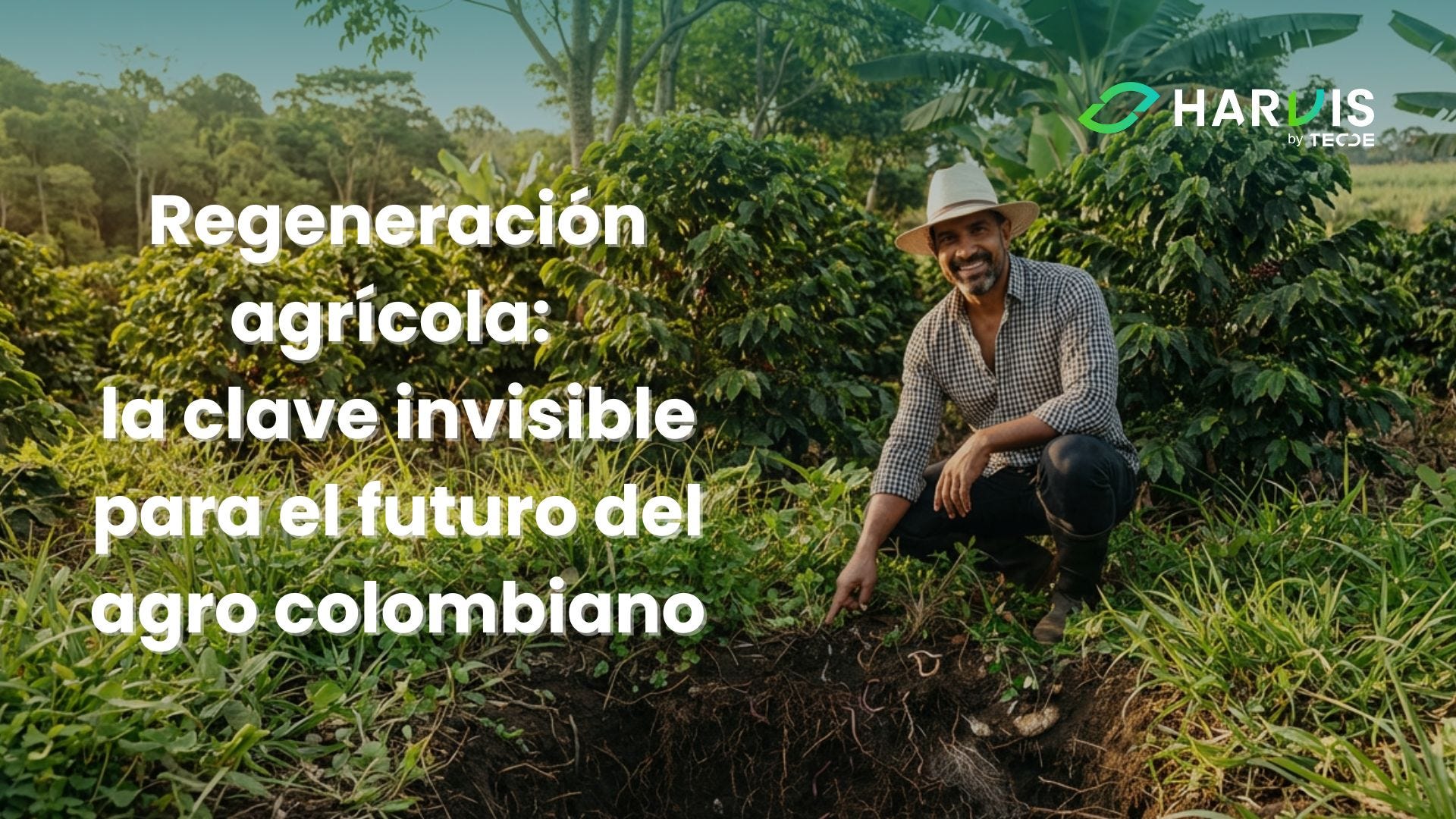
Global agriculture is at a turning point. The pressure to produce more, combined with climate change and the progressive degradation of soils, forces us to rethink methods that for decades prioritized immediate yield over ecosystem health. For Colombia, a country known for its high-quality coffee, flower exports, avocado, and palm, as well as a rich agroecological diversity, this reflection is not just necessary: it is urgent. Regenerative agriculture then appears as a technical and commercial response that seeks to recover the productive capacity of soils, improve water management, and open doors to markets that increasingly value sustainability. However, its success depends on adaptation to each local context, institutional support, and continuous technical training.
What do we mean when we talk about regenerative agriculture?
In technical terms, regenerative agriculture encompasses a set of practices aimed at restoring the biological processes of the soil. These include permanent ground cover, crop rotations, diversified production systems, the use of green manures, reduced tillage, planned grazing, and agroforestry systems. More than a unique recipe, it is an approach that adapts these tools according to the territory, climate, and type of production. The interesting thing is that the results can be seen and measured relatively quickly, especially in two areas: soil health and water management. In the coffee-growing regions of the Andes, for example, recovering vegetation cover and introducing green manures has helped reduce erosion and improve nutrient availability. Meanwhile, in the Llanos and savannas, the adoption of rotations, silvopastoral systems, and the incorporation of forage and tree species have strengthened soil structure and increased its capacity to retain water. These practices not only elevate productivity in the medium term but also increase the farms' ability to capture carbon from the atmosphere. Various technical studies conducted in the country confirm that strategies such as silvopastoral systems and agroforestry truly contribute to restoring degraded soils and improving yields under local conditions.

The key is in the support Now, none of these practices work if they remain only on paper. Rural extension and training are absolutely necessary for the transition to be effective. National institutions for technical and agricultural training, through specialized programs and rural extension schools, have been expanding their training offerings and support models to bring technology and practical methodologies to rural areas. These direct training processes in the field allow technicians and producers to correctly apply regenerative measures. Strengthening rural extension is undoubtedly a fundamental piece for these practices to stop being isolated experiences and to scale up in the enormous diversity of climates and production systems in the country. And it is not just theory. In Colombia, there are already concrete experiences that demonstrate that this is viable both economically and environmentally. There are flower producers who have implemented regenerative practices even in intensive crops, and coffee and livestock farms that document improvements in resilience to water variations and in productivity associated with soil recovery. Specialized media on economic and agricultural issues have begun to cover these processes, showing that the interest goes beyond the technical: there are also real commercial and climatic opportunities. Institutional articulation and public policies For all this to work at scale, the articulation between different actors is crucial. Agricultural research centers, technical training institutions, state entities in the agricultural and health sectors, and producer associations must work in a coordinated manner. Research centers have developed applied work that supports the dissemination of regenerative practices, focusing on soil restoration, agroforestry management, and adaptation according to crop and region. These inputs are essential to ground regenerative techniques in the diverse Colombian realities. But mass adoption requires something more: financing mechanisms and business models that include initial incentives, sustained technical support, and access to differentiated markets. International experiences and various published analyses indicate that the combination of differentiated prices based on environmental attributes, payment instruments for ecosystem services, and extension programs focused on concrete results help overcome the initial adoption barriers. In Colombia, consolidating these mechanisms involves aligning public policies with technical and market offers that truly facilitate the transition, especially for small and medium producers. A bet on the future In summary, regenerative agriculture in Colombia is not an academic trend or a mere marketing label. It is a technical and strategic response to soil erosion, variability in water availability, and the increasing demands of markets that require real sustainability. The country has capable institutions, successful pilot cases, and accumulated local knowledge to advance in this direction, in addition to institutions and companies dedicated to agriculture that allow for this. What is needed is to accelerate training, strengthen rural extension, and articulate economic incentives that allow regeneration to stop being a sporadic experience and become a widespread practice. The decision is not just productive: it is a bet on climate resilience, food security, and the competitiveness of the Colombian agricultural sector in the coming decades. The time to act is immediate.
📚Consulted Sources
1. Ministry of Agriculture and Rural Development (Colombia). (2024). Public policy guidelines: Agroecology policy and transition to sustainable models (Technical annex). Ministry of Agriculture
2. National Learning Service — SENA. (n.d.). AgroSENA and National School of Rural Extension: training programs and manuals. https://www.sena.edu.co
3. AGROSAVIA. (2023). Research and contributions to the transition to regenerative agriculture in Colombia. https://www.agrosavia.co 4. Portafolio. (June 2025). Regenerative agriculture in Colombia: an alternative to climate change and water crisis. https://www.portafolio.co 5. FOLU Colombia / Comfama. (2022). Guidelines for regeneration: Practical guide for territories. https://folucolombia.org 6. University of Antioquia. Bulletin / Rural Extension. (2021). Rural extension in the context of agriculture and its role in technology transfer. University of Antioquia 7. Quiroz, B.E.P. (2021). Livestock in silvopastoral production systems: pilot experiences in Colombia. Revista F Agropecuaria. editorial.uniamazonia.edu.co 8. UNAD / Local project. (2017). Implementation of silvopastoral systems and windbreaks in Boyacá: technical report. UNAD Repository 9. World Economic Forum. (2024). How regenerative agriculture builds resilient climate solutions. Portafolio.co 10. FAO. (2022). Regenerative agriculture: principles and approaches (compilation and technical guides). FAO. Ministry of Labor 11. Sher, A. (2024). Importance of regenerative agriculture: climate, soil health, biodiversity, and its socioecological impact. Discover Sustainability. sembrandocapacidades.fao.org.co 12. CAF. Development Bank of Latin America. (2025). Toward a resilient, sustainable, and regenerative agriculture (report). cipav.org.co 13. CENICAFÉ / publications. (2023). Regenerative Agriculture: recommendations for sustainable coffee production in Colombia. (Technical report / proceedings). editorial.uniamazonia.edu.co 14. Fruit Portal (Colombia). (2023). Five steps to apply regenerative agriculture in Colombia. https://www.portalfruticola.com 15. UDEA Magazine / Colombian academic journals. (2003–2021). Articles and reviews on silvopastoral systems, rural extension, and soil restoration in Colombia. revistas.udea.edu.co+1