

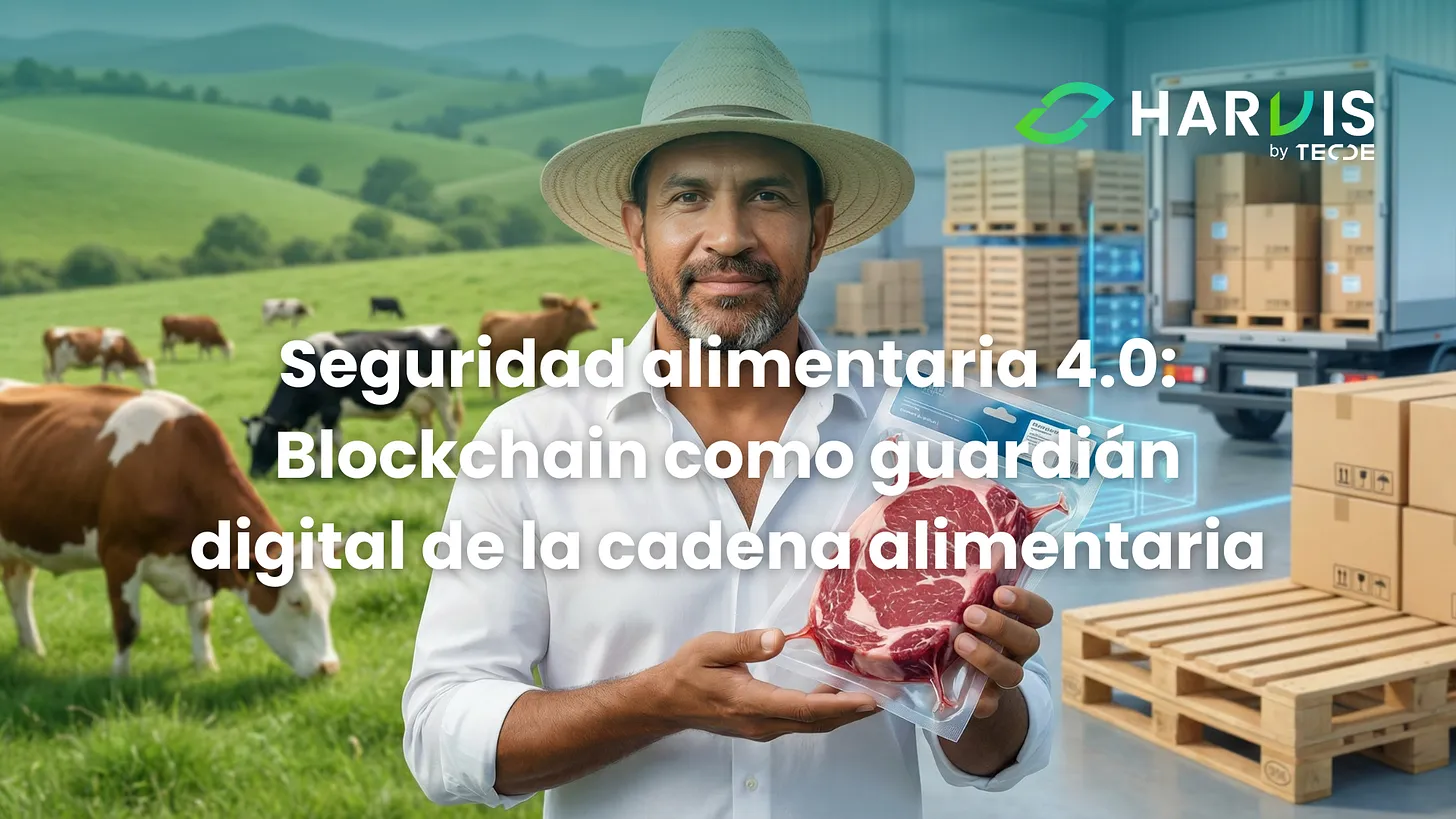
The food industry is facing an unprecedented technological revolution that is radically transforming the relationship between producers and consumers. 71% of people are willing to pay a premium for companies that offer transparency and complete traceability; this is why Blockchain technology emerges as a solution to create completely transparent, verifiable, and immutable food supply chains. In our previous editions, we explored one aspect of agricultural production, where decisions are evaluated that companies require to comply with the most important certifications demanded by international markets, techniques from the perspective of water use, soil, biotechnology, and the concentration conditions of active ingredients in traces of exportable products. In this new article, we want to address how the end consumer has a great interest in understanding each phase that the food they are eating had to go through, and this is where Blockchain technology becomes the protagonist of this research.
Every time we scan a QR code on a food product and access detailed information about its origin, cultivation conditions, processing, and transportation, we are experiencing the transformative power of blockchain applied to food traceability. This technology represents much more than an incremental improvement in traditional tracking systems: it constitutes a paradigmatic shift towards the total democratization of food information, where each consumer can become an independent verifier of the quality, sustainability, and authenticity of the food they consume. Blockchain traceability in food is defined as a technology that uses a decentralized and immutable ledger to track every step in the food supply chain, recording key data points from sourcing to distribution, ensuring transparency, security, and real-time visibility of the origins and handling of products. This systematic approach transcends the limitations of traditional traceability systems to create a completely auditable and verifiable information ecosystem that operates 24/7 without centralized intermediaries._
🌽Food Transparency
The inherent complexity of modern food supply chains presents fundamental challenges for traditional traceability. Agro-food supply chains are complex and involve a large number of actors, from small farmers, primary processors, and traders to product manufacturers, distributors, retailers, and consumers. This complexity limits traceability from farm to table, which is key to identifying sustainability-related issues in agro-food systems, including extreme inequality and poverty, human rights violations, and environmental degradation. Traditional food tracking systems rely on paper documentation, centralized databases, and manual processes that create multiple points of failure, opportunities for manipulation, and significant delays in responding to food crises. When contamination or outbreaks of foodborne illnesses occur, conventional methods can require days or weeks to identify the source of the problem, during which potentially dangerous products continue to be consumed and distributed. Recent food crises have demonstrated the devastating consequences of inadequate traceability systems: massive product recalls affecting millions of consumers, economic losses of billions of dollars for producers and retailers, and most importantly, serious public health risks that could have been mitigated with more efficient and accurate tracking systems. Consumer demand for transparency has evolved beyond simply knowing ingredients and nutritional information to include expectations about environmental practices, labor conditions, organic production methods, animal welfare, and fair trade. Modern consumers, especially younger generations, are willing to pay premium prices for products that demonstrate verifiable authenticity and alignment with their personal values. Blockchain technology fundamentally addresses the limitations of traditional traceability systems by creating distributed, cryptographically secure, and immutable records that document every transaction, movement, and quality verification throughout the food supply chain. Each block of information is cryptographically linked to the previous one, creating a data chain that is practically impossible to alter without detection, providing an unprecedented level of data integrity. The inherent decentralization of blockchain eliminates single points of failure and the dependence on centralized authorities that traditionally control and validate traceability information. Instead of relying on a single corporate or governmental entity, the blockchain system allows multiple supply chain participants to maintain synchronized copies of the complete record, ensuring that no party can unilaterally manipulate historical information. Smart contracts embedded in blockchain platforms automate the verification and compliance of quality standards, organic certifications, storage conditions, and food safety protocols. These autonomous programs automatically execute predefined actions when specific conditions are met, such as alerting all chain participants if refrigeration temperature exceeds safe limits or automatically verifying the authenticity of fair trade certifications. The tokenization of food assets allows each batch, product, or even individual ingredients to be represented as unique tokens on the blockchain, facilitating granular tracking and data aggregation from multiple sources. This approach allows for the creation of "digital twins" of physical products that maintain complete and immutable histories from seed to final consumption. The most revolutionary interface of food blockchain is its ability to transform simple QR codes into portals of complete and verified information about food products. When a consumer scans a QR code on a blockchain-enabled product, they instantly access a data ecosystem that includes information about the original farmer, cultivation methods used, harvest dates, transportation conditions, quality certifications, and even measured environmental impact. This experience transcends simple information inquiries to become a consumer empowerment tool that enables fully informed purchasing decisions. The most advanced systems provide intuitive interfaces that allow non-technical users to easily navigate complex product histories, compare different options based on personalized criteria, and even receive automatic alerts about recalls or safety issues affecting previously purchased products. Users can access real-time traceability information about each product batch by scanning QR codes or barcodes on the item, or through the web panel. Reviewing all associated data and observations in one place, delving into assemblies to access details of sub-assemblies and individual product batches. This granularity allows consumers to access not only information about the final product but also specific details about each ingredient, additive, and manufacturing process involved. Specialized mobile applications for blockchain traceability are evolving into comprehensive platforms that combine product scanning with additional functionalities such as home inventory management, expiration alerts, personalized nutritional recommendations, and direct connections with local producers. These tools transform smartphones into authenticity verification devices that can detect counterfeit products, confirm organic certifications, and validate sustainability claims.

📡Technologies: IoT- AI- Predictive Analytics
The most promising evolution in food blockchain traceability arises from the synergistic integration with the Internet of Things (IoT), artificial intelligence, and predictive analytics. Distributed IoT sensors along the food supply chain continuously collect data on temperature, humidity, air quality, sunlight, and other critical environmental factors that affect food quality and safety. This environmental data is automatically recorded on the blockchain through smart contracts that automatically validate compliance with quality standards and activate alerts when deviations are detected. Machine learning algorithms analyze historical data patterns to predict potential problems before they occur, optimize transportation routes to maintain ideal conditions, and recommend optimal harvest times based on weather and market conditions. The convergence of these technologies is creating "smart agriculture" systems where every decision is backed by real-time data and predictive analysis. Farmers can optimize the use of water, fertilizers, and pesticides based on accurate data about soil and weather conditions, while distributors can predict demand and optimize inventories to minimize food waste. The most advanced platforms incorporate predictive risk analysis that continuously evaluates multiple variables to identify products most likely to develop safety or quality issues. This preventive capability represents a fundamental shift from reactive systems to proactive systems that prevent problems before they affect consumers.
📈Food Traceability
The implementation of blockchain in food traceability is generating measurable impacts in waste reduction and improvement of food safety. Blockchain technology can effectively help trace contaminated products (even if it is just one ingredient) back to their source and halt the further spread of foodborne illnesses. In addition to rapid containment of illnesses with reduced response times, blockchain also reduces food waste by allowing more precise recalls that affect only the specific contaminated batches rather than withdrawing entire categories of products. Traditional recall systems often result in the preventive removal of millions of safe products due to the inability to precisely identify the affected batches. The granularity of blockchain traceability allows for "surgical" recalls that minimize economic and environmental waste while maintaining the highest consumer safety standards. Improved transparency is incentivizing better practices throughout the supply chain, as each participant knows that their actions will be permanently recorded and auditable. This "panoptic effect" is raising quality standards, reducing fraudulent practices, and promoting innovation in sustainable production methods. Blockchain platforms are also facilitating the creation of more efficient markets by providing symmetric information to all participants, reducing uncertainty, and allowing better coordination between producers, distributors, and retailers. This improved efficiency translates into more stable prices, better inventory planning, and significant reductions in food waste.
🔝Implementation and Scalability Challenges
The mass adoption of blockchain in food traceability faces significant technical, economic, and cultural challenges that require innovative solutions and coordination among multiple companies. Scalability remains a major obstacle, as traditional blockchains like Bitcoin and Ethereum have limitations that are inadequate to handle the massive volume of transactions generated by global food supply chains. Implementation costs represent significant barriers, especially for small producers and companies in developing countries that could benefit most from improved transparency but have limited resources to invest in new technologies. Successful solutions require business models that distribute costs equitably among all beneficiaries of the system, including consumers willing to pay premium prices for verified transparency. Interoperability between different blockchain platforms and legacy systems represents another critical challenge. The food industry involves thousands of companies using diverse and often incompatible information systems. A successful transition to blockchain traceability requires common standards, open APIs, and integration protocols that allow communication between different platforms. Consumer education and adoption also present unique challenges. Although demand for transparency is high, many consumers still do not fully understand the capabilities of blockchain or how to use available traceability tools.
💡The Future
The convergence of blockchain, IoT, artificial intelligence, and biotechnology is creating a future where every food item will have a complete and verifiable digital identity that accompanies the physical product from conception to consumption. This "democratization of food information" is empowering consumers to make decisions that reflect not only nutritional preferences but also environmental, ethical, and social values. The next generations of blockchain traceability systems will incorporate genomic analysis of crops, real-time biodiversity monitoring, continuous measurement of carbon footprint, and automatic verification of labor conditions. This multidimensional information will create "food passports" that provide complete and verifiable stories about each product. Integration with augmented reality will allow consumers to visualize traceability information overlaid directly on physical products, creating immersive shopping experiences where scanning a product instantly reveals its complete history, environmental impact, personalized nutritional information, and even recommended recipes based on individual preferences. Predictive markets based on blockchain will allow consumers to "vote" for specific agricultural practices through their purchasing decisions, creating direct economic incentives for innovation in sustainability, animal welfare, and fair labor practices. This "food democracy" where every purchase is a vote for the future of the food system represents a fundamental transformation in the relationship between production and consumption. The successful implementation of blockchain in food traceability requires systemic transformations that transcend purely technological aspects to include regulatory changes, innovative business models, and new forms of collaboration among traditional competitors. Governments are developing regulatory frameworks that incentivize transparency while protecting commercially sensitive information, creating delicate balances between competition and collaboration. Alliances between tech giants, agricultural producers, retailers, and consumer organizations are creating collaborative ecosystems where information is shared in ways that benefit all participants. These "value networks" are replacing traditional models based on zero-sum competition with collaborative approaches that generate shared value. Consumer education is evolving beyond simply informing about the benefits of transparency to empowering individuals to use traceability information to optimize nutritional decisions, minimize personal environmental impact, and support business practices aligned with personal values. The next decade will see the consolidation of global standards for food blockchain traceability, the emergence of universally recognized certifications, and the complete integration of these technologies into the daily operations of the entire food supply chain. Every food product will have a complete and verifiable digital story, every consumer will have instant access to complete information about their food, and every purchasing decision will directly contribute to the continuous optimization of the global food system. The blockchain revolution in food traceability represents much more than an incremental technological improvement: it constitutes a fundamental transformation towards a completely transparent, efficient food system aligned with human and environmental values. Every scanned QR code, every tracked product, every informed decision builds the foundations of a future where food information is a universal right and total transparency is the norm, not the exception.
📚 SOURCES CONSULTED
- Frontiers in Sustainable Food Systems. "Consumer adoption of food blockchain traceability: insights from integrating TAM and TR models". May 29, 2025. https://www.frontiersin.org/journals/sustainable-food-systems/articles/10.3389/fsufs.2025.1515188/full
- Dock.io. "Blockchain Food Traceability: Enhancing Transparency and Safety". https://www.dock.io/post/blockchain-food-traceability
- Linux Foundation Decentralized Trust. "How Walmart brought unprecedented transparency to the food supply chain with Hyperledger Fabric". March 10, 2025. https://www.lfdecentralizedtrust.org/case-studies/walmart-case-study
- PMC. "Blockchain-Based Frameworks for Food Traceability: A Systematic Review". https://pmc.ncbi.nlm.nih.gov/articles/PMC10453023/
- Farmonaut. "Blockchain Traceability Food 2025: Supply Chain Solutions". July 23, 2025. https://farmonaut.com/blogs/blockchain-traceability-food-2025-supply-chain-solutions
- LiVE Blockchain. "Food Traceability on the Blockchain: A Transparent Future for Consumers". September 7, 2025. https://www.live-mkt.com/2025/09/07/food-traceability-on/
- World Economic Forum. "From source to stomach: How blockchain tracks food across the supply chain and saves lives". August 2024. https://www.weforum.org/stories/2024/08/blockchain-food-supply-chain/
- TracexTech. "Blockchain For Food Traceability | Food Safety and Transparency". July 4, 2025. https://tracextech.com/blockchain-for-food-traceability/
- United Nations Development Programme. "Blockchain for Agri-Food Traceability". https://www.undp.org/publications/blockchain-agri-food-traceability
- ResearchGate. "FoodSQRBlock: Digitizing Food Production and the Supply Chain with Blockchain and QR Code in the Cloud". March 22, 2021. https://www.researchgate.net/publication/350292464FoodSQRBlockDigitizingFoodProductionandtheSupplyChainwithBlockchainandQRCodeintheCloud
- Wholechain. "Blockchain Based Supply Chain Traceability". https://wholechain.com/
- Small Business Inventory Management. "Food Traceability Software | Food Traceability Blockchain". https://small-business-inventory-management.com/shared-traceability/
- Emerald Insight. "Consumers' valuation of blockchain-based food traceability: role of consumer ethnocentrism and communication via QR codes". February 13, 2024. https://www.emerald.com/insight/content/doi/10.1108/bfj-09-2023-0812/full/html