


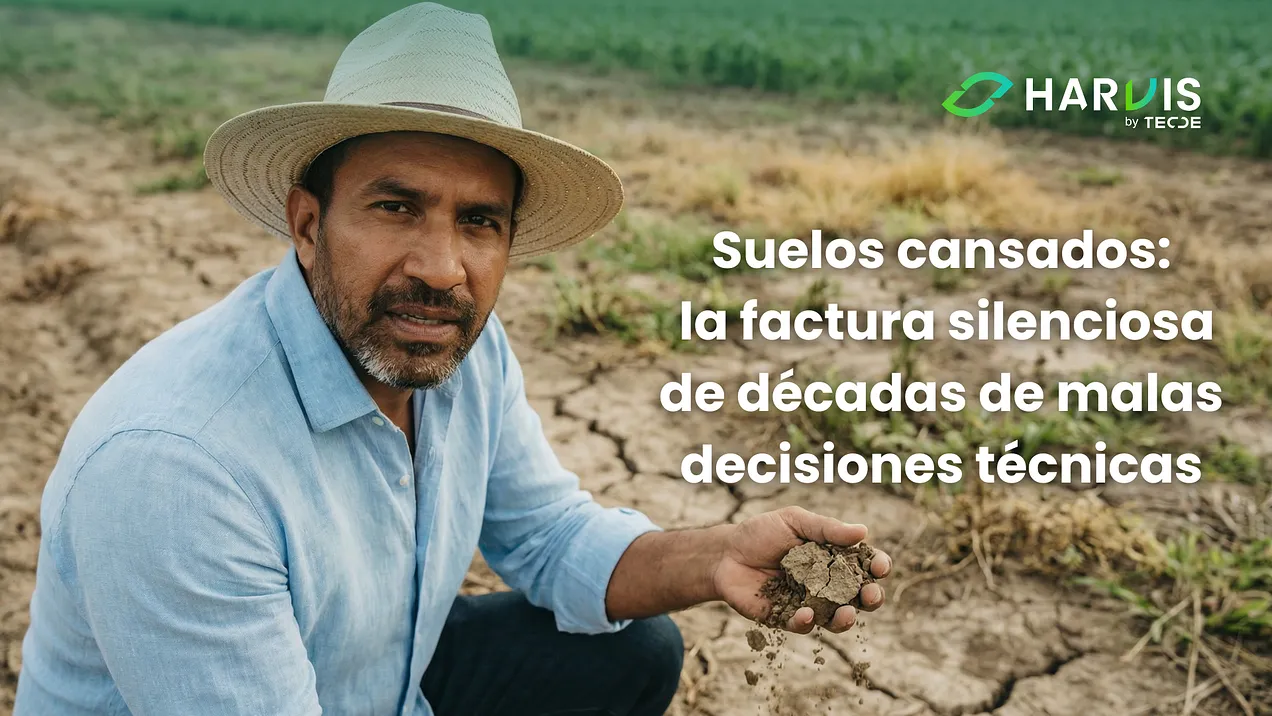
I have worked on farms that could not be more different from each other: coffee slopes, cattle plains, cold mountain soils, and intensive tropical systems. However, when the conversation progresses and we stop talking about the harvest of the month, the same background appears: the soil no longer supports the system as it used to. This coincidence, repeated time and again in such different regions, is not a coincidence; it is a clear sign that the problem is structural.
I have seen producers doubling fertilizer doses hoping to achieve the yields of ten years ago. I have seen ranchers rotating pastures and applying corrections, but ignoring that the problem lies twenty centimeters beneath their feet. I have seen technicians recommending soil analysis and being perplexed when the results show an abundance of nutrients, yet the crops still do not respond. What is really happening? The answer is not in a missing element of NPK, nor in an unbalanced pH. It is in something much deeper and harder to reverse: a soil that has lost its ability to function as a living system.
The problem starts where no one looks: in the physical structure of the soil. In Colombia, we have inherited decades of poor agricultural practices that have turned the upper horizons of the soil into compacted and suffocated layers. Research confirms it: nearly 50% of the country's agricultural area is susceptible to severe compaction due to the use of heavy machinery during different phases of cultivation, exerting excessive pressure that alters the physical characteristics of the soil. And that does not account for the 45 million hectares dedicated to livestock activities, where animal trampling in intensive systems generates surface compaction, erosion on slopes, and the formation of gullies that dramatically reduce the functionality of the resource.
When the soil compacts, something occurs that many producers do not realize: macroporosity is reduced, water infiltration decreases, oxygen movement is limited, and root growth is restricted. In practical terms, this means that the crop cannot explore the soil in search of water and nutrients, no matter how much is there. It’s like having a bank account full of money but without the card to access it. Soil analyses may show phosphorus, potassium, calcium, and magnesium at adequate levels, but if the roots cannot penetrate beyond ten centimeters, those nutrients are simply not available to the plant.
_Read our article: Living Soil: The Underground Microbiological Revolution._
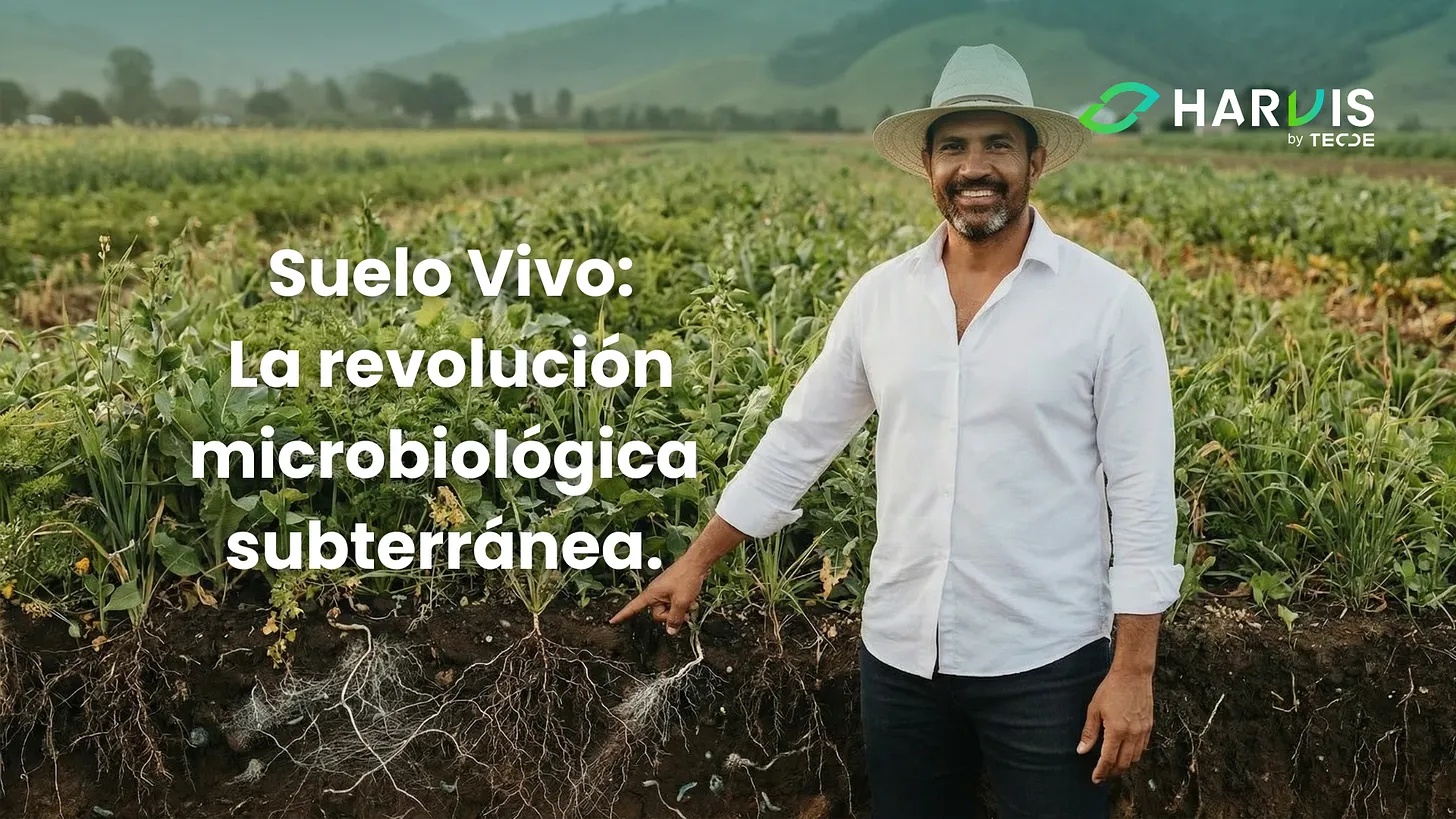 Living Soil: The Underground Microbiological Revolution.The ecosystem that beats beneath our feet.
What makes this situation particularly frustrating is that deep compaction is difficult to detect at first glance and even more complicated to correct. Unlike surface compaction, which can be managed relatively easily and does not persist for long, subsurface compaction can negatively affect crop growth and yield for years after it occurs. I have visited farms where they plowed deep thinking they would solve the problem, only to further compact the wet soil with the weight of the tractor. The result: a lost investment and an aggravated problem.
But compaction is just the first part of the story. Beneath that compressed soil lies another problem that is equally or more serious: the loss of functional biology. When we talk about tired soils, we are not only referring to a physical problem but also to an ecosystem that has lost its metabolic capacity. Soils with appropriate water and air conditions enhance microbial activity, but agriculture frequently deteriorates the physical conditions of the soil, harming the survival of microbes. Years of monoculture, indiscriminate use of agrochemicals, and absence of organic matter have decimated the microbial populations that once performed essential functions: solubilizing phosphorus, fixing nitrogen, decomposing organic residues, and protecting roots from pathogens.

I recently visited a palm crop where the analyses showed extremely high levels of phosphorus in the soil, but the plants exhibited clear symptoms of deficiency. What was the reason? The phosphorus was in the ground, but the plant could not utilize it because the microorganisms that form beneficial symbiotic associations with plants had been eliminated by years of agricultural practices that include pesticide use. Mycorrhizal fungi, those invisible allies that extend the root system of plants and facilitate nutrient absorption, were simply not present. The producer had invested thousands of dollars in phosphorus fertilizers that accumulated in the soil without generating any productive benefit.
This loss of biology has consequences that extend far beyond crop nutrition. Chemical fertilizers kill beneficial microorganisms along with pathogens, which can lead to imbalances in the soil and the emergence of diseases in plants. A vicious cycle is created: we apply more agrochemicals to control pests and diseases, which kills more beneficial microorganisms, further weakening the natural immune system of the soil, forcing us to apply even more products. And in the process, it has been estimated that 70% of nitrogen applications are lost and 75% of phosphorus is fixed in the soil without being utilized, representing monumental economic losses and severe environmental pollution.
This situation leads us to the third component of the problem: chronic nutritional imbalances that have settled in our production systems. In recent decades, the fertilization strategy in Colombia has been based on a simplistic logic: if the crop does not respond, we apply more fertilizer. If the yield drops, we increase the dose. Farmers in the country make inefficient and unsustainable use of fertilizers; their excessive use causes nutritional imbalances, even reaching toxic levels in the soil, and unnecessarily increasing production costs. I have seen soil analyses with toxic levels of potassium because potassium chloride was applied for years without any technical criteria, just because "it has always been done this way." I have seen soils with extreme acidic pH due to decades of urea application without any corrective measures. And I have seen producers going bankrupt because each year they need more inputs to obtain less production.
The result of these decades of mismanagement is brutally reflected in yield statistics. Colombia produces 4.5 tons of rice per hectare while Uruguay reaches 9.3 tons, meaning that to produce 100 tons, Colombia requires 22 hectares while Uruguay only needs 10. In coffee, Colombia yields 0.81 tons per hectare, less than half of Brazil's 1.77 tons and three and a half times less than Vietnam's 2.93 tons. These numbers do not lie: our soils are exhausted, and it is not just a problem of crop genetics or climate. It is a fundamental problem, a problem of soil.
The most concerning aspect is that this situation affects all Colombian agricultural sectors equally. In livestock, intensive systems with high animal loads generate severe problems of surface compaction and erosion on slopes, dramatically reducing the productive capacity of pastures. In coffee cultivation, decades of monoculture without adequate incorporation of organic matter have left soils acidic, imbalanced, and biologically dead. In short-cycle crops like potatoes and vegetables, excessive tillage and massive chemical fertilization have destroyed soil structure and eliminated its functional biota. And in palm, cocoa, and fruit systems, the absolute dependence on synthetic fertilizers has generated unsustainable production costs that represent the largest item in the cost structure, mainly due to fertilizers, combined with the low fertility of the soils.
I have talked to hundreds of producers who are trapped in this spiral. They know that the soil is bad, but they do not understand exactly what is failing. They apply more fertilizer because it is the only tool they know, even though they see less and less response each time. Some have tried alternative practices: incorporating organic fertilizers, using bioinoculants, implementing rotations. But without a precise diagnosis of the physical, chemical, and biological state of their soil, these interventions are blind bets that rarely work.
And this is where technology can make a real difference, not as a passing trend, but as a diagnostic and decision-making tool. Tools like Harvis allow producers to document the behavior of their crops, identify response patterns, correlate management practices with productive results, and, above all, make decisions based on real data from their farm, not on generic recommendations that work in other contexts but fail in theirs. It is not about replacing agronomic knowledge with algorithms, but about enhancing decision-making with precise and timely information that helps understand what is really happening beneath our feet.
But let’s be honest: neither technology nor any other isolated intervention will solve this problem on its own. Recovering tired soils requires a complete paradigm shift in how we understand and manage this resource. It requires accepting that the soil is not an inert substrate to which we simply add nutrients, but a living ecosystem that needs to be restored in its physical, chemical, and biological functionality. It requires understanding that the solution is not more fertilizer, but better conditions for roots to access the nutrients that are already there. It requires incorporating management practices that reduce compaction, increase organic matter, reactivate soil biology, and promote its long-term health.
This implies difficult decisions. It means reducing heavy machinery traffic during times of high soil moisture, even if that delays work. It means implementing cover crops and rotations, even if that reduces the cultivated area in the short term. It means systematically incorporating organic amendments, even if it initially seems like an additional cost. It means gradually reducing dependence on synthetic fertilizers while reactivating soil biology, even if the transition is difficult in the first years. And above all, it means having the humility to recognize that decades of poor decisions cannot be corrected in a single growing season.
I recently visited a livestock farm in Magdalena Medio where the producer decided to take this path. He isolated the most critical areas with erosion, implemented silvopastoral systems with nitrogen-fixing trees, reduced the animal load per hectare, established an appropriate pasture rotation, and began incorporating compost made on the farm. The first two years were tough: production temporarily dropped, and costs rose because he needed more labor. But by the third year, the soil began to respond. Water infiltration improved, grasses grew more vigorously, animals gained weight faster, and, most importantly, the cost of fertilizers was reduced by half. The producer told me something that perfectly summarizes the situation: "It took me twenty years to tire this soil. I couldn't expect to fix it in six months."
Because that is the point that many producers and technicians do not want to accept: reversing decades of degradation requires time, investment, and, above all, a genuine commitment to the long-term health of the soil. There are no magic solutions or miracle products that restore in one application what has been destroyed over decades. It is time to rethink agronomic practices, especially the conservation and sustainability of soils, not as an empty sustainability discourse, but as an urgent economic and productive necessity.
Tired soils are not a problem of the future. They are the problem of the present that is limiting our productivity, increasing our costs, reducing our competitiveness, and putting the sustainability of our agricultural systems at risk. Every season that passes without addressing the real causes of the problem—compaction, loss of biology, and nutritional imbalances—is a season in which the soil degrades a little more and the bill for decades of poor decisions becomes a little more expensive to pay.

We can continue adding more bags of fertilizer to soils that no longer respond, hoping for different results with the same practices that caused the problem. Or we can have the honesty to recognize that the soil is sending a clear message: it can no longer take it. And that as long as we do not radically change our way of managing it, no increase in fertilizer dosage, no improved variety, and no cutting-edge technology will compensate for the structural damage we have caused at the very foundation of our agricultural production.
The question is not whether we can afford the cost of restoring our soils. The question is: Can we afford the cost of not doing it?