

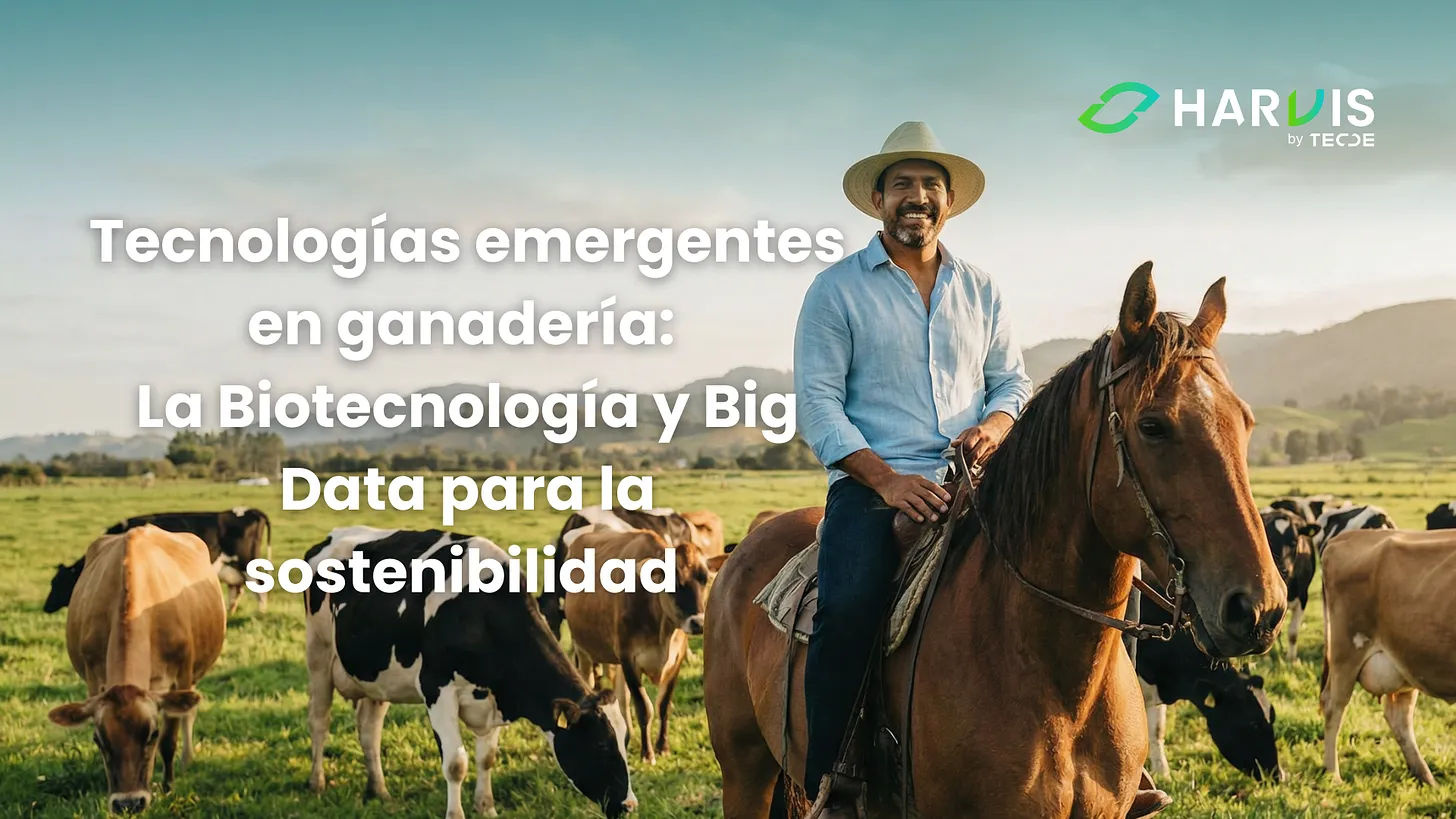
Current livestock systems process around 2.5 TB of biometric, genomic, and environmental information daily, which remained invisible for a long time until new methodologies like advanced biotechnology, big data, and artificial intelligence systems began to converge. This integration of technologies allows for the transformation of various aspects of livestock production, from precision genetic editing to the optimization of algorithms based on data that improve environmental sustainability processes, generating increases of 35 to 50% in productive efficiency while reducing the carbon footprint and maximizing the economic profitability of contemporary livestock operations.
In our previous publications, we have addressed a series of topics related to technology in agriculture and the importance of information precision and technology in livestock, which has allowed us to understand the state of the art of emerging technologies in these crucial areas for the agricultural segment, enabling the use of methodologies that not only positively impact the efficiency of production systems but also integrate practices that are sustainable and profitable at the same time.
In the current century, livestock transcends towards improving traditional methodologies to become a system that integrates biotechnology and data, where each data analyzed predictively allows for the optimization of tasks and decision-making based on stronger foundations regarding occurrence patterns on producing farms in each of their segments. Today we delve into the most disruptive emerging technologies: applied biotechnology, big data for sustainability, and the digital transformation of dairy farms in Colombia that are redefining global livestock production paradigms.
Biotechnology in Livestock🔬
Just as in agriculture, livestock biotechnology has gained significant prominence as a scientific methodology that uses tools from genetic engineering, functional genomics, and molecular biology to optimize productive, reproductive, environmental adaptation characteristics, and dominance of important traits in livestock through animal genetic improvement practices, based on the development of gene practices aimed at obtaining genetically superior animals that maximize productive efficiency while minimizing environmental impact through permanent heritable improvements in new generations regarding diseases, greater feed efficiency, and quality of products such as milk and meat.
The global biotechnology industry dedicated to livestock is growing exponentially through the implementation of CRISPR-Cas9 technologies that allow for ultra-precise editing of animal DNA, the implementation of advanced therapies, and genomic selection that have demonstrated the ability to reduce methane emissions by approximately 40% while incrementally achieving greater productivity, longevity of animals, and greater resistance to pathogens in genetically modified animals, offering significant benefits such as: increased production, improved quality and feed efficiency, sex control in future offspring creating a bias towards the desired sex in production, and improved disease resistance.
🧬 Genetic Editing: Rewriting Bovine DNA.
The CRISPR-Cas9 technology applied to livestock allows for ultra-precise genetic modifications that introduce specific beneficial traits without altering other aspects of the animal genome. Scientists have developed cattle with natural resistance to tuberculosis by editing the NRAMP1 gene, eliminating genetic susceptibility to this devastating disease that causes significant economic losses and extremely high deaths annually.
Genetic modifications for feed efficiency have created cattle lines with improved feed conversions of 25-35% through the editing of genes regulating energy metabolism, muscle growth, and nutritional utilization. Genetically edited animals show superior weight gains with lower feed consumption, significantly reducing production costs and environmental emissions per unit of meat produced.
Genetic editing for thermal tolerance introduces allelic variants of thermoregulating genes that allow for maintaining productivity under extreme thermal stress conditions. Modified cattle express improved heat shock proteins, more efficient heat dissipation systems, and adapted metabolic mechanisms that maintain milk and reproductive production at temperatures that would severely compromise conventional animals.
Developments in epigenetic editing use modified CRISPR systems to alter DNA methylation patterns and histone modifications that regulate gene expression without changing nucleotide sequences. These heritable epigenetic modifications optimize the expression of genes related to milk production, nutritional composition of milk, and resistance to mastitis through targeted transcriptional regulation.
🐄🐂Advanced Reproductive Biotechnology
Assisted reproduction techniques have evolved towards in vitro production systems that combine oocytes recovered through follicular aspiration with sexed and genetically selected sperm to produce embryos of superior genetics with predetermined characteristics. Embryo culture systems use chemically defined media and controlled atmospheres that maximize development rates and embryonic viability.
The cryopreservation of gametes and embryos through ultra-rapid vitrification allows for long-term storage of valuable genetic material, facilitating the conservation of superior genetic lines, international genetic exchange, and the establishment of genomic banks that preserve genetic diversity for future generations.
Nuclear transfer cloning techniques allow for the production of genetically identical animals with proven exceptional characteristics, multiplying elite individuals with superior productive, reproductive, or adaptation performance through exact replication of desirable genotypes.
Pre-implantation embryo sexing systems use blastomere biopsy and genetic analysis to determine the sex of embryos before transfer, optimizing production according to specific objectives of the production system through targeted selection of females for replacement or males for fattening.
📈Big Data for Livestock Sustainability: The Power of Prediction in Farm Information
Big data platforms for livestock integrate continuous flows of information from IoT sensors, genomic analyses, production records, weather data, commodity prices, and environmental variables to create information ecosystems that process petabytes of structured and unstructured data through machine learning algorithms and artificial intelligence that identify complex patterns, predict future trends, and optimize management decisions in real-time.
Distributed storage systems use hybrid cloud architectures that combine local edge computing storage with cloud processing to minimize latency, ensure continuous data availability, and optimize infrastructure costs through automatic scaling according to variable processing demands.
Streaming analytics technologies process data in real-time through algorithms that identify critical events, detect statistical anomalies, and generate automatic alerts in the event of deviations from normal parameters, facilitating immediate responses to emerging problems before they become significant economic losses.
Multivariate predictive models integrate climatic variables, market prices, historical production data, and demand trends to generate accurate forecasts that optimize strategic decisions regarding marketing timing, optimal inventory levels, feeding strategies, and short, medium, and long-term capital investment planning.
Combinatorial optimization algorithms solve complex resource allocation problems that maximize economic efficiency through optimal distribution of livestock among pastures, formulation of minimum cost diets that meet nutritional requirements, and scheduling of management activities that minimize animal stress while maximizing operational productivity.
Business intelligence systems process key performance indicators (KPIs) that quantify productive efficiency, economic profitability, environmental sustainability, and animal welfare through interactive dashboards that facilitate decision-making based on objective evidence and comparative analysis with industry benchmarks.

🌍 Precision Environmental Monitoring
Geospatially distributed environmental sensors continuously measure greenhouse gas emissions, water quality, soil degradation, pasture biodiversity, and resource use efficiency through monitoring networks that generate high-resolution maps of environmental impact that identify emission points, degradation areas, and improvement opportunities through spatially targeted interventions.
Carbon quantification systems use near-infrared spectroscopy, stable isotope analysis, and biogeochemical models to precisely measure carbon capture in soils, plant biomass, and root systems, facilitating participation in carbon markets and environmental compensation programs that generate additional income from ecosystem services.
Intelligent Environmental Monitoring Systems 🌿
Integrated environmental management systems combine distributed IoT sensors, satellite analysis, and predictive models to continuously monitor environmental quality parameters including methane and nitrous oxide emissions, contamination of water sources, soil degradation, biodiversity loss, and efficiency in the use of natural resources through digital platforms that generate automatic alerts and management recommendations that minimize environmental impact.
Smart digesters equipped with pH, temperature, gas composition, and energy production sensors automatically optimize operational conditions that maximize biogas generation while minimizing fugitive methane emissions, generating enough renewable energy to cover 40-70% of the energy needs of dairy farms through the utilization of bovine excreta.
Wastewater treatment plants use advanced bioremediation technologies, biological filters, and recirculation systems that reduce contaminant load by 95-98% before final disposal, allowing for the reuse of treated water for pasture irrigation and reducing pressure on natural water sources through internal recycling of resources.
♻️Carbon Capture and Climate Mitigation Technologies
Intelligent silvopastoral systems integrate genetically selected native tree species for rapid growth and high carbon capture with improved pastures through computationally optimized designs that maximize atmospheric carbon sequestration while providing shade, climate protection, and income diversification through timber and non-timber products.
Nutritional strategies for methane reduction use feed additives such as 3-nitrooxypropanol, essential oils, condensed tannins, and specific probiotics that modify ruminal fermentation to reduce enteric methane emissions by 20-40% while maintaining or improving productivity through enhanced digestive efficiency and energy utilization of feeds.
Genetic improvement programs for climate efficiency select animals with lower methane production per unit of product, greater feed efficiency, and better adaptation to thermal stress conditions through selection indices that combine economic productivity with environmental sustainability in comprehensive improvement objectives.
💧Sustainable Water Management and Technology
Intelligent water management systems combine level sensors, water quality, animal consumption, and irrigation efficiency with predictive climate models to optimize the use of water resources through automated distribution, recycling of gray water, rainwater harvesting, and precision irrigation systems that minimize waste while ensuring continuous availability for animal and crop needs.
Water purification technologies use multi-layer filtration systems, UV disinfection, reverse osmosis, and biological treatment to ensure microbiological and chemical quality of water supplied to animals, eliminating pathogens, chemical contaminants, and residues that compromise animal health or the quality of dairy products.
Watershed monitoring systems use distributed sensors and satellite analysis to assess the impact of livestock activities on shared water resources, facilitating integrated watershed management that balances productive needs with the conservation of aquatic ecosystems through responsible management practices.
🔄Circular Economy and Byproduct Valorization
Circular economy systems integrate the processing of livestock byproducts to create closed value chains that minimize waste while generating additional income through the transformation of manure into organic fertilizers, biogas into renewable energy, whey into functional foods, and slaughterhouse byproducts into protein meals for animal feed.
Automated composting plants process bovine manure through controlled aeration systems, temperature monitoring, and mechanical turning that produce certified organic compost with optimized nutritional content that replaces synthetic fertilizers, reduces production costs of forages, and improves the physical-chemical properties of degraded soils.
🥛 Sustainability in Colombian Dairy Farms: Environmental Digital Transformation
Colombia produces 7.2 billion liters of milk annually through 538,000 livestock operations managing 16.2 million heads of cattle distributed mainly in the departments of Antioquia (18%), Córdoba (12%), Cundinamarca (11%), Boyacá (9%), and Cesar (8%), representing 1.4% of the national GDP and generating direct and indirect employment for 950,000 rural families who economically depend on activities related to the production, processing, and marketing of dairy products.
Colombian dairy farms face unique challenges related to extreme climatic variability, complex mountainous topography, land fragmentation, limited access to advanced technologies, and the need to improve international competitiveness through increases in productivity, quality, and environmental sustainability that meet growing international standards.
Regions specialized in dairy production show heterogeneous productivities that vary from 3.5 liters/cow/day in traditional extensive systems to 28 liters/cow/day in intensive technified systems, indicating significant improvement potential through the adoption of appropriate technologies and optimized management practices.
💡Model Farms of Technological Innovation
Successful implementations of emerging technologies in Colombian dairy farms demonstrate returns on investment exceeding 280% through the combination of applied biotechnology, big data systems, and sustainability technologies that increase productivity by 40-65% while reducing environmental impact by 35-55% and improving product quality through continuous monitoring and data-driven optimization.
Integrated management systems combine genomic selection of superior breeders, precision feeding based on individualized nutritional analysis, continuous environmental monitoring, and complete blockchain traceability that generate premium dairy products with sustainability certifications, animal welfare, and nutritional quality that access differentiated markets with a 25-40% price premium.
Assisted reproduction technologies have increased pregnancy rates by 35-50% through optimized hormonal synchronization, artificial insemination with sexed semen, and transfer of superior genetic embryos that reduce calving intervals, increase productive longevity, and improve overall reproductive efficiency of dairy herds.
💰Financing and Investment Models
Innovative financing mechanisms include technological leasing, results-based payment models, green financing, and public-private partnerships that facilitate access for medium producers to advanced technologies through flexible financial structures that align payments with increases in productivity and generation of additional income.
Impact investment funds provide capital for the implementation of sustainable technologies through financial instruments that combine economic return with positive environmental and social impact, facilitating the scaling of technological innovations in rural sectors traditionally excluded from formal financial markets.
🚧Technological Challenges and Adoption Barriers
The implementation of emerging technologies in livestock faces significant limitations related to insufficient rural connectivity, unstable electrical infrastructure, limited access to high-speed internet, and restricted availability of specialized technical services that compromise the functionality of IoT systems, cloud platforms, and applications that require continuous and stable connectivity.
The investments required in telecommunications infrastructure include the installation of communication towers, distributed renewable energy systems, fiber optic networks, and satellite communication systems that increase initial costs and require inter-institutional coordination for the development of comprehensive rural infrastructure.
Interoperability challenges between different technological platforms require the development of communication standards, data exchange protocols, and application programming interfaces (APIs) that facilitate the integration of heterogeneous systems developed by different technology providers.
Technical training needs include the development of skills in interpreting genomic data, managing big data platforms, operating biotechnological equipment, analyzing sustainability indicators, and making decisions based on artificial intelligence that require continuous education programs, technology transfer, and specialized technical assistance.
Technology extension programs must integrate theoretical training with practical training, develop educational materials adapted to different levels of formal education, and create mentoring systems that facilitate the gradual adoption of complex technologies through personalized technical support.
University-industry partnerships facilitate the development of specialized academic programs, applied research, technology transfer, and training of qualified human resources that support the mass adoption of emerging technologies in livestock sectors by linking academia with the real needs of producers.
Emerging Technologies and Future Perspectives
🤖Advanced Artificial Intelligence and Machine Learning
Developments in artificial intelligence include deep learning algorithms that analyze microscopic images for automated veterinary diagnosis, natural language processing for interpreting technical reports, computer vision for automated evaluation of body condition, and intelligent recommendation systems that optimize management decisions through multivariate predictive analysis.
Digital twins of complete livestock systems simulate alternative management scenarios, predict impacts of climate changes, optimize environmental mitigation strategies, and facilitate long-term planning through comprehensive modeling that includes biological, economic, environmental, and social variables in complex simulations.
Specialized neural networks process data from multiple sensors to detect subtle patterns in animal behavior, physiology, production, and environment that predict future events, identify optimization opportunities, and generate automatic recommendations that continuously improve through adaptive learning.
Advanced Nanotechnology and Biosensors 🔬
Implantable nanosensors continuously monitor internal physiological parameters including hormone levels, inflammatory markers, metabolic indicators, and nutritional status through biocompatible devices that transmit data in real-time without compromising animal welfare or requiring repetitive invasive interventions.
Veterinary nanomedicines use nanoparticles with specific functions for targeted delivery of medications, controlled-release vaccines, specific diagnostic agents, and gene therapies that improve therapeutic efficacy while minimizing side effects through precise molecular targeting.
Next-Generation Biotechnology 🧬
Next-generation genetic editing techniques include improved CRISPR systems with ultra-high precision, base editors that allow for specific nucleotide changes, prime editors that perform targeted insertions and deletions, and transcriptional activation systems that modulate gene expression without altering DNA sequences.
Developments in synthetic biology facilitate the design of complex genetic circuits, creation of organisms with novel functions, production of customized biomaterials, and development of biological systems that respond to specific stimuli through directed genetic programming.
Advanced therapies include in vivo genetic editing using targeted viral vectors, organ regeneration through tissue engineering, personalized immunotherapies for bovine cancer, and gene treatments for rare genetic diseases that currently lack therapeutic options.
📚REFERENCED SOURCES
- Nature Biotechnology. “CRISPR applications in livestock: current state and future prospects”. 2025. https://www.nature.com/nbt
- Science Translational Medicine. “Gene therapy advances in veterinary medicine”. 2024.
- Cell. “Functional genomics in cattle: from genome to phenome”. 2025.
- Nature Sustainability. “Big data applications in sustainable livestock systems”. 2024. https://www.nature.com/natsustain
- Proceedings of the National Academy of Sciences. “Digital transformation of livestock production systems”. 2025.
- FAO. “Biotechnology applications in animal production and health”. 2025. https://www.fao.org/biotechnology/livestock/en/
- Nature Climate Change. “Greenhouse gas mitigation in livestock systems through emerging technologies”. 2024.
- Environmental Science & Technology. “Life cycle assessment of biotechnology applications in cattle production”. 2025.
- Journal of Animal Science and Biotechnology. “Precision livestock farming: technological innovations and sustainability”. 2024.
- Applied Animal Behaviour Science. “Welfare implications of emerging technologies in cattle management”. 2025.
- Livestock Science. “Genomic selection and reproductive biotechnologies in cattle breeding”. 2024.
- Agriculture, Ecosystems & Environment. “Sustainable intensification of cattle production systems”. 2025.
- Animal Frontiers. “Future perspectives on cattle biotechnology and precision farming”. 2024.
- Revista Colombiana de Ciencias Pecuarias. “Emerging technologies in Colombian dairy farming”. 2025.
- FEDEGAN. “Diagnosis of Colombian livestock and technological perspectives”. 2024 https://www.fedegan.org.co
- McKinsey & Company. “The future of food: biotechnology and sustainable agriculture”. 2025.
- Deloitte. “Digital transformation in livestock: emerging technologies and market opportunities”. 2024.
- PwC. “Sustainable agriculture technology trends: livestock sector analysis”. 2025.